Clark Bros. Inc. Named ENR West 2026 Best Energy/Industrial Project for Gonzaga Ridge Wind Farm
August 12, 2026
The award recognizes the project team’s exceptional work delivering 150 MW of renewable energy while repowering a high-fire-risk ridgeline site within an active California state park.
Clark Bros. Inc. Earns ENR West 2026 Best Energy/Industrial Award for Gonzaga Ridge Wind Farm
Clark Bros. Inc. is proud to announce that the Gonzaga Ridge Wind Farm has been named ENR West’s 2026 Best Energy/Industrial project in Northern California.
The recognition from Engineering News-Record (ENR) honors projects that demonstrate excellence in overcoming complex challenges, contributing to the industry and community, maintaining a strong commitment to safety, and delivering high-quality design and construction. ENR reviewed 131 projects from California and Hawaii before selecting its 2026 Best Projects and Awards of Merit.
For Clark Bros. and the entire Gonzaga Ridge project team, the award represents the successful execution of a uniquely challenging renewable energy project, and the collaborative effort required to bring it across the finish line.
Repowering California’s Wind Energy Infrastructure
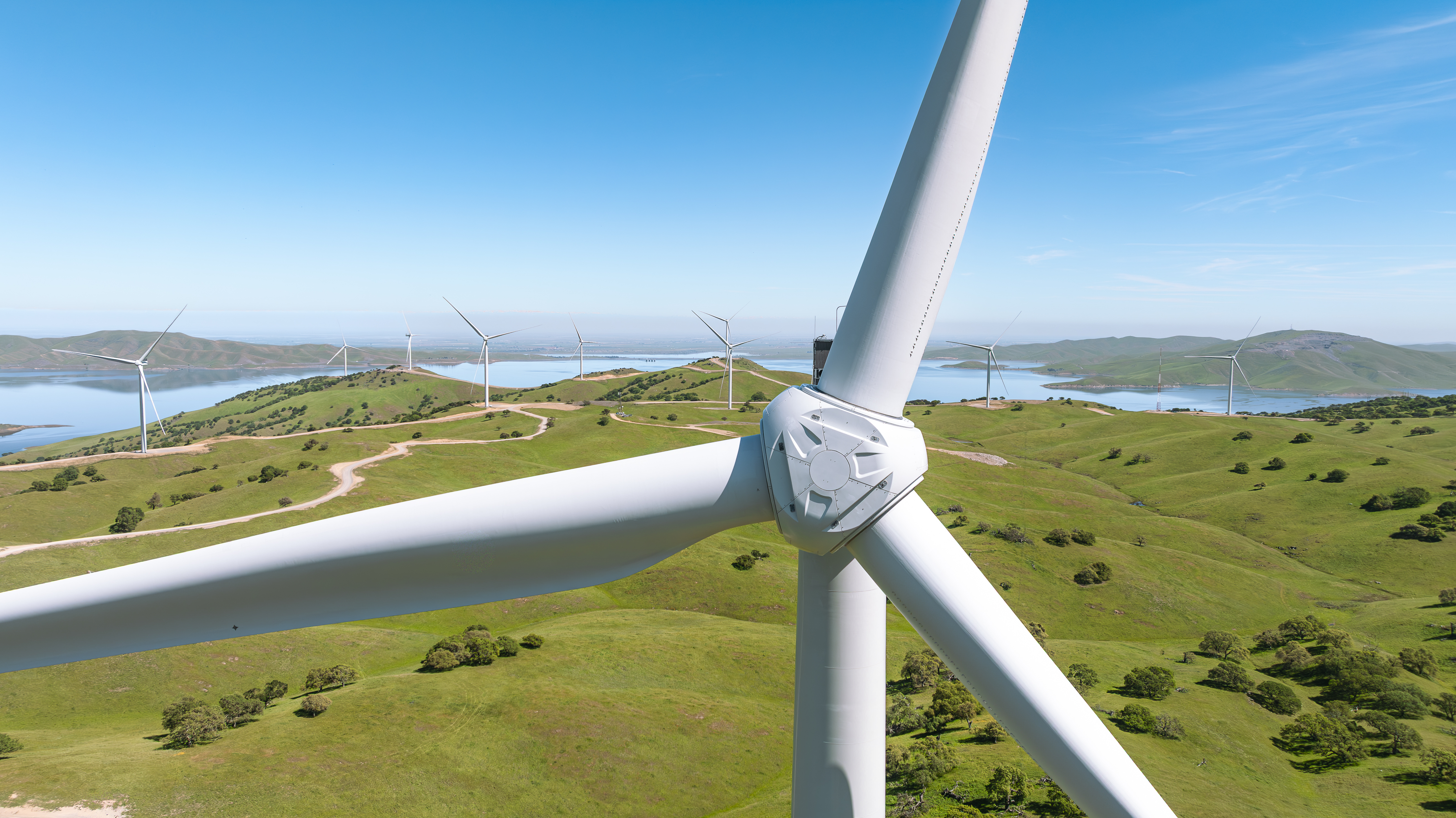
Located in Northern California, the Gonzaga Ridge Wind Farm replaced 168 aging turbines dating back to the 1980s with 25 modern turbines capable of producing a combined 150 MW of renewable energy.
The project broke ground in July 2024 and reached completion in April 2026. Clark Bros. Inc. served as the general contractor and EPC contractor, working alongside owner Scout Clean Energy, lead electrical engineer NEI Electric Power Engineering, structural engineer RRC, civil engineer Fisher Associates, and a team of specialized trade partners and subcontractors.
The result is a more productive wind energy facility that generates significantly more power from fewer turbines and with a reduced footprint.
But achieving that result required the team to navigate some of the most demanding conditions found in utility-scale wind construction.
Building in a High-Fire-Risk, Environmentally Sensitive Area
Gonzaga Ridge is located within an active California state park along State Route 152. The project site presented a combination of environmental, logistical, geological and safety challenges that influenced virtually every aspect of construction.
Environmental protection was central to the project from the beginning. Wetlands and state park boundaries restricted where roads, turbine pads and laydown areas could be constructed. The team worked continuously with State Parks to maintain approved work limits, protect sensitive areas and minimize disruption to the surrounding landscape.
The state park also remained open and operating throughout construction and decommissioning.
That meant the project team had to coordinate heavy equipment, oversized deliveries, turbine erection, demolition and other construction activities while maintaining public safety and protecting the park experience.
Engineering Solutions for Steep and Difficult Terrain
One of Gonzaga Ridge’s defining challenges was its terrain.
The site included grades reaching 17%, requiring specialized equipment and carefully coordinated construction sequencing. The ridgeline was also served by a narrow access road, approximately 20 feet wide, that remained the primary route for equipment, materials and personnel as construction progressed.
The team used specialized Goldhofer trailers, blade lifters and prime movers to transport oversized turbine components through conditions where conventional hauling equipment could not operate effectively.
Subsurface conditions created another challenge. Hard rock was encountered in areas where the planned grades could not be achieved without intervention. Working with State Parks, the team incorporated controlled drill-and-blast operations into the construction schedule to reach competent rock while maintaining environmental and regulatory requirements.
Rather than allowing these challenges to drive delays, the team integrated the blasting work into the broader construction sequence to maintain progress toward foundation turnover and turbine erection.
Smarter Logistics From Port to Pad
With limited laydown space and a constrained public highway corridor, traditional turbine component storage and delivery methods were not practical.
The Gonzaga Ridge team developed a just-in-time delivery strategy supported by an on-site transload yard.
Tower sections, nacelles and blades were scheduled to arrive when installation crews and equipment were ready to receive them. This approach reduced component storage on environmentally sensitive ground, minimized congestion along State Route 152 and helped eliminate the demurrage and detention costs that can occur when oversized turbine components arrive before a site is prepared to receive them.
Bragg Companies played a critical role in the project's transportation and installation effort, working as an integrated team with the turbine supplier to move and install the components under extremely constrained conditions.
The combination of specialized hauling equipment, disciplined sequencing and just-in-time logistics helped make it possible to construct a utility-scale wind project on one of the most challenging ridgeline sites in the region.
Safety Built Into Every Phase
Safety was another defining component of the Gonzaga Ridge project.
The site-specific safety program was designed around the project's unique hazards, including remote mountainous terrain, heavy civil construction, wildfire exposure, specialized energy infrastructure and complex turbine installation activities.
Because of the site's elevated wildfire risk, the project implemented enhanced fire-prevention measures and a Stop Work Authority program that incorporated environmental conditions and critical fire-weather thresholds. Work could be adjusted or suspended when conditions increased risk.
The project also incorporated dedicated firewater systems, firefighting equipment, vegetation management, ignition-source controls and fire watch procedures.
Daily Job Hazard Analyses, pre-task planning meetings, weekly toolbox talks, field oversight and ongoing engagement from project leadership and safety professionals helped keep crews focused on changing site conditions.
Personnel received specialized training covering areas such as fall protection, rigging and suspended loads, excavation and trenching, confined spaces, high-voltage considerations, fire prevention and heat illness.
Repowering With Sustainability in Mind
The project’s sustainability story extends beyond the 150 MW of new renewable generation.
As part of the repowering effort, the team decommissioned 168 aging turbines and recycled blades and metal materials rather than sending them to landfill. The decommissioning was completed without an environmental incident.
The project also demonstrates how aging wind assets can be repowered to produce more renewable energy while reducing the number of turbines and limiting permanent land disturbance.
Gonzaga Ridge brings new renewable generation into California’s energy market after a lengthy gap in new California wind development. According to the project submission, it provides a practical example of how utility-scale wind development can move forward in environmentally sensitive, high-seismic and high-fire-risk terrain.
A Model for the Future of California Wind Energy
Perhaps the most significant achievement at Gonzaga Ridge is not any single construction technique or piece of specialized equipment. It is the way the entire project team brought together engineering, environmental stewardship, logistics, safety, construction and regulatory coordination to solve problems that could not be addressed in isolation.
The project also marked the Office of the State Fire Marshal’s first utility-scale renewable energy and interconnection undertaking as the Authority Having Jurisdiction, creating an important precedent for how fire-safety requirements can be integrated into large-scale renewable energy and grid infrastructure projects in high-hazard landscapes.
For Clark Bros., the ENR recognition is a reflection of the people and partnerships behind the project.
From the initial engineering and environmental planning through decommissioning, civil construction, turbine transportation and installation, the Gonzaga Ridge team remained focused on one objective: delivering a safe, reliable and productive renewable energy facility while respecting the surrounding community and environment.
ENR’s recognition as the 2026 Best Energy/Industrial project in Northern California validates that effort.
Gonzaga Ridge Wind Farm demonstrates what is possible when experienced teams collaborate to tackle difficult terrain, demanding environmental conditions and complex logistics, and it provides a blueprint for the next generation of wind energy projects across California and the American West.
Congratulations to the entire Gonzaga Ridge Wind Farm team on this well-deserved recognition.